
What Is the Best Paper for Business Cards?
If you’re ordering new cards, you may be wondering what is the best paper for business cards? There isn’t one stock that’s right for every business. The best choice depends on the design, how you want the card to feel and how you’ll be using it.
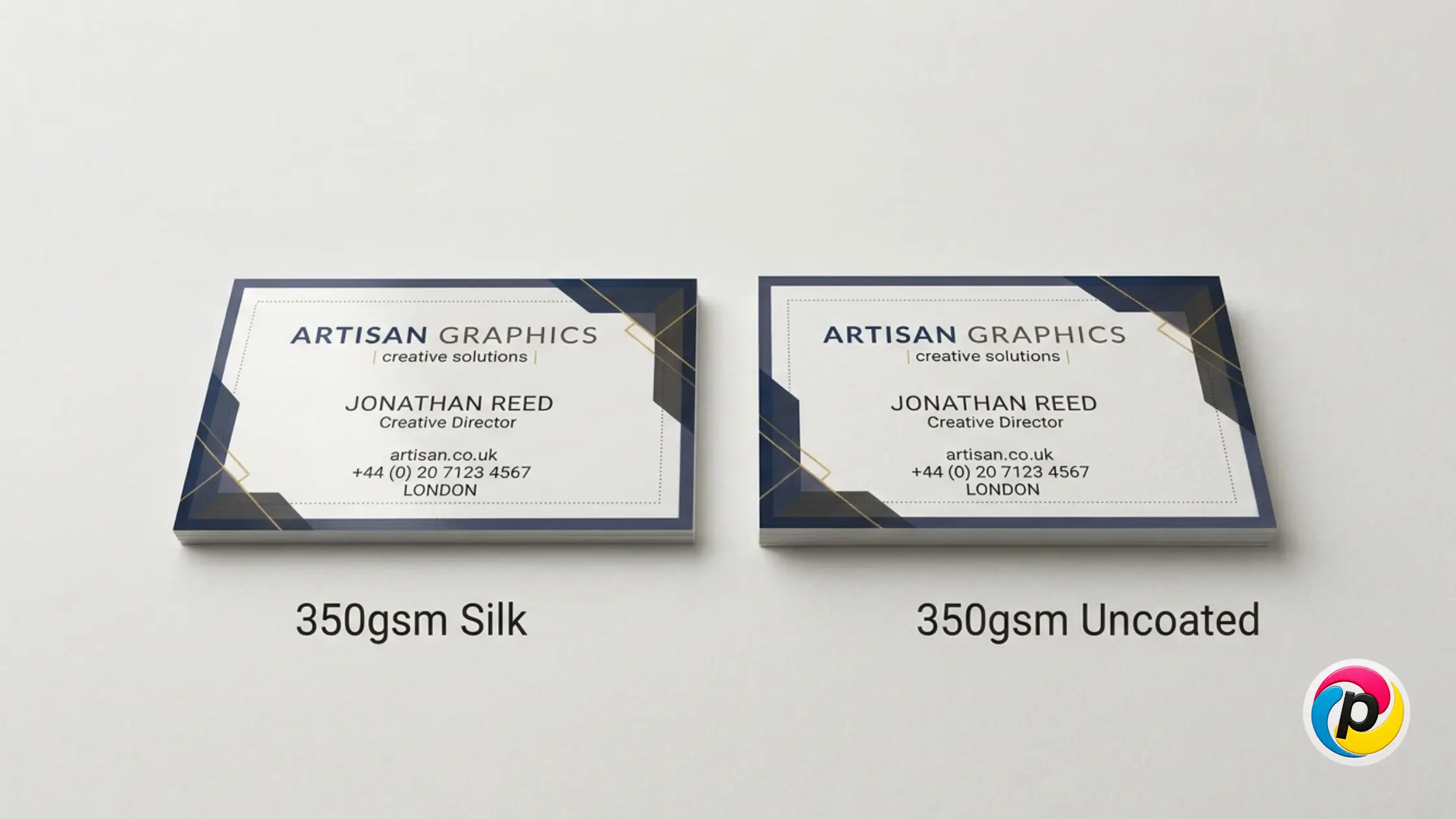
For most professional business cards, we’d recommend choosing a substantial card stock rather than ordinary paper. Popular options include 350gsm silk for a smooth, versatile surface and quality uncoated card for a more natural paper feel.
What Paper Is Normally Used for Business Cards?
Business cards are generally printed on card rather than standard paper. A typical professional business card will use a stock of around 350gsm or heavier.
However, weight is only part of the decision. Two card stocks with the same GSM can look and feel noticeably different depending on whether they’re coated, uncoated, smooth or textured.
Our guide on what GSM is best for business cards explains this distinction in more detail.
Is 350gsm Silk Good for Business Cards?
Yes. 350gsm silk is a versatile choice for professional business cards.
Silk card has a smooth coated surface with a subtle sheen. It suits a broad range of designs without having the highly reflective appearance associated with a gloss surface.
It’s a practical option for company cards, sales teams, networking, exhibitions and general corporate use.
What Are Uncoated Business Cards?
Uncoated stock doesn’t have the same coated surface as silk card. This produces a more natural paper texture and a different overall feel.
It can work particularly well when the material itself forms part of the design or when a more understated paper finish suits the brand.
Because the surface is different, artwork can also appear different from the same design printed onto a coated material. That’s part of the character of the stock.
Silk or Uncoated Business Cards: Which Is Better?
Neither is automatically better.
Silk card is a strong all-round option if you want a smooth professional surface that works with a wide variety of designs.
Uncoated card can be a better choice where a natural paper feel is particularly important to the design.
The stock should complement the brand rather than simply being selected because one material sounds more premium than another.
Does the Finish Matter as Much as the Paper?
It can. Once you’ve chosen the card stock, the finish may significantly alter the surface and overall feel.
Our guide to matt vs gloss business cards compares two common approaches, while our article on soft touch lamination on business cards looks at a more tactile alternative.
Does Paper Colour Matter?
Yes. The physical colour of the stock forms part of the finished printed piece.
A warm ivory board, for example, will naturally have a different appearance from a white card before any artwork is printed onto it.
This is particularly noticeable in designs containing large areas of white space because the unprinted stock itself becomes part of the design.
Does the Paper Affect How Colours Print?
Different paper surfaces can produce different printed appearances.
A coated silk stock and an uncoated card don’t absorb and reflect printed colour in exactly the same way. This is one reason you shouldn’t judge a final printed business card purely by how the artwork looks on a phone or computer screen.
For more information about preparing artwork, see our guide on whether business cards should be CMYK or RGB.
What Else Should I Check Before Ordering?
Once you’ve chosen your paper, make sure the artwork itself is prepared correctly.
For standard UK cards, the finished size is 85mm × 55mm. You should also include 3mm bleed on every edge where the design runs to the edge.
Our guides to the standard UK business card size and how much bleed business cards need explain both requirements.
Business Card Printing in London
Printpal London offers professional business card printing in London with different card stocks available depending on your specification and turnaround.
If you’re unsure which paper is most suitable, consider the purpose of the card, the artwork and how you’d like the completed material to feel rather than selecting on GSM alone.
Final Thoughts
So, what is the best paper for business cards? For many everyday professional applications, 350gsm silk is an excellent all-round choice. If you’re looking for a more natural paper feel, a quality uncoated card can be a strong alternative.
The important thing is to choose the paper based on the complete business card rather than weight alone.
View our business card printing in London options to compare available specifications.