
What Should You Put on a Business Card?
If you’re designing a new card, you may be wondering what should you put on a business card? The best business cards contain enough information to make contacting you easy without trying to squeeze too much into a small space.
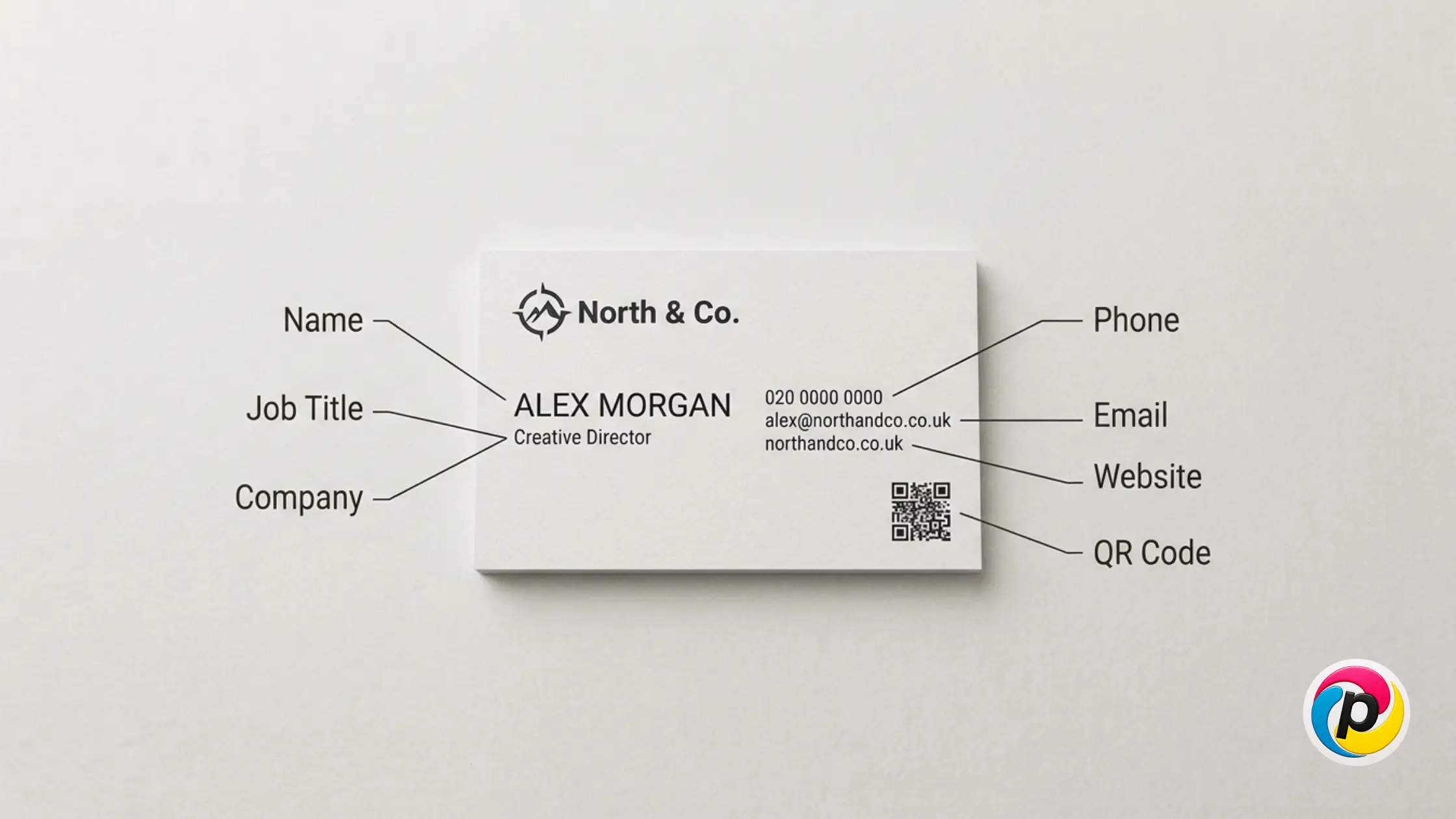
For most businesses, the essentials are your name, company, job title and the main ways someone can contact you. Everything else should earn its place.
What Information Should a Business Card Include?
- Your name
- Job title or role
- Company or brand name
- Telephone number
- Email address
- Website
- Company logo or branding
Should You Include Your Job Title?
Usually, yes. Your job title helps the person receiving the card understand your role within the business.
If your role is obvious from the company name or you work independently, it may be less important.
Should You Put Your Mobile Number on a Business Card?
Include whichever telephone number you want customers or contacts to use.
There’s normally no need to include several different numbers if one main contact number will do the job.
Do You Need an Email Address?
For most businesses, yes. Email remains one of the most useful contact details to include.
Where possible, use a clear professional address that doesn’t take up unnecessary space.
Should You Put Your Website on a Business Card?
Yes, particularly if your website provides details about your services, portfolio or contact information.
A clean domain name is usually easier to read than a long full URL.
Should You Include Social Media?
Only if it’s genuinely relevant to the business.
If Instagram or LinkedIn is an important way customers interact with you, including the relevant account can make sense. There’s rarely a need to list every social network.
Should You Put a QR Code on a Business Card?
A QR code can be useful when it links to something practical, such as your website, portfolio, booking page or contact details.
A double-sided card can provide useful extra room for this. Read our guide on whether business cards should be single or double sided.
What Should You Leave Off a Business Card?
Try to avoid cluttering the card with information that isn’t essential.
- Long paragraphs
- Every service your company offers
- Several telephone numbers
- Too many social media accounts
- Very long URLs
- Information likely to change frequently
A business card is primarily a contact and branding tool, not a miniature brochure.
What Size Should the Text Be?
If you need to reduce the font dramatically to fit everything onto the card, that’s usually a sign there’s too much information.
See our guide to what size font you should use on a business card for practical guidance.
Remember the Business Card Size and Safe Area
A standard UK business card finishes at 85mm × 55mm. Important information should remain comfortably inside the trim rather than sitting close to the cutting edge.
Read our guides to the standard UK business card size and how much bleed business cards need when preparing your artwork.
Business Card Printing in London
Once your design is ready, Printpal London offers professional business card printing in London for businesses, professionals and individuals.
Final Thoughts
So, what should you put on a business card? Start with the essentials: your name, role, business, telephone number, email and website. Add anything else only when it provides a clear benefit.
The best business cards aren’t usually those containing the most information. They’re the ones that make the important information easy to find.
Explore our business card printing in London options for available stocks, finishes and turnaround times.