
Printed in London · Fast turnaround · Expert team

Printing Company Near Me: How to Choose a Reliable Printer

If you’re searching for a printing company near me, reliability matters just as much as location. A suitable printing company should be able to confirm that it can produce your specification, explain what artwork it needs, give you a realistic turnaround and make clear how and when you’ll receive the finished order.

The closest printer isn’t necessarily the most suitable one. For professional or commercial printing, it’s worth comparing capabilities, communication, turnaround, reviews and the way each company handles your particular type of job before placing an order.
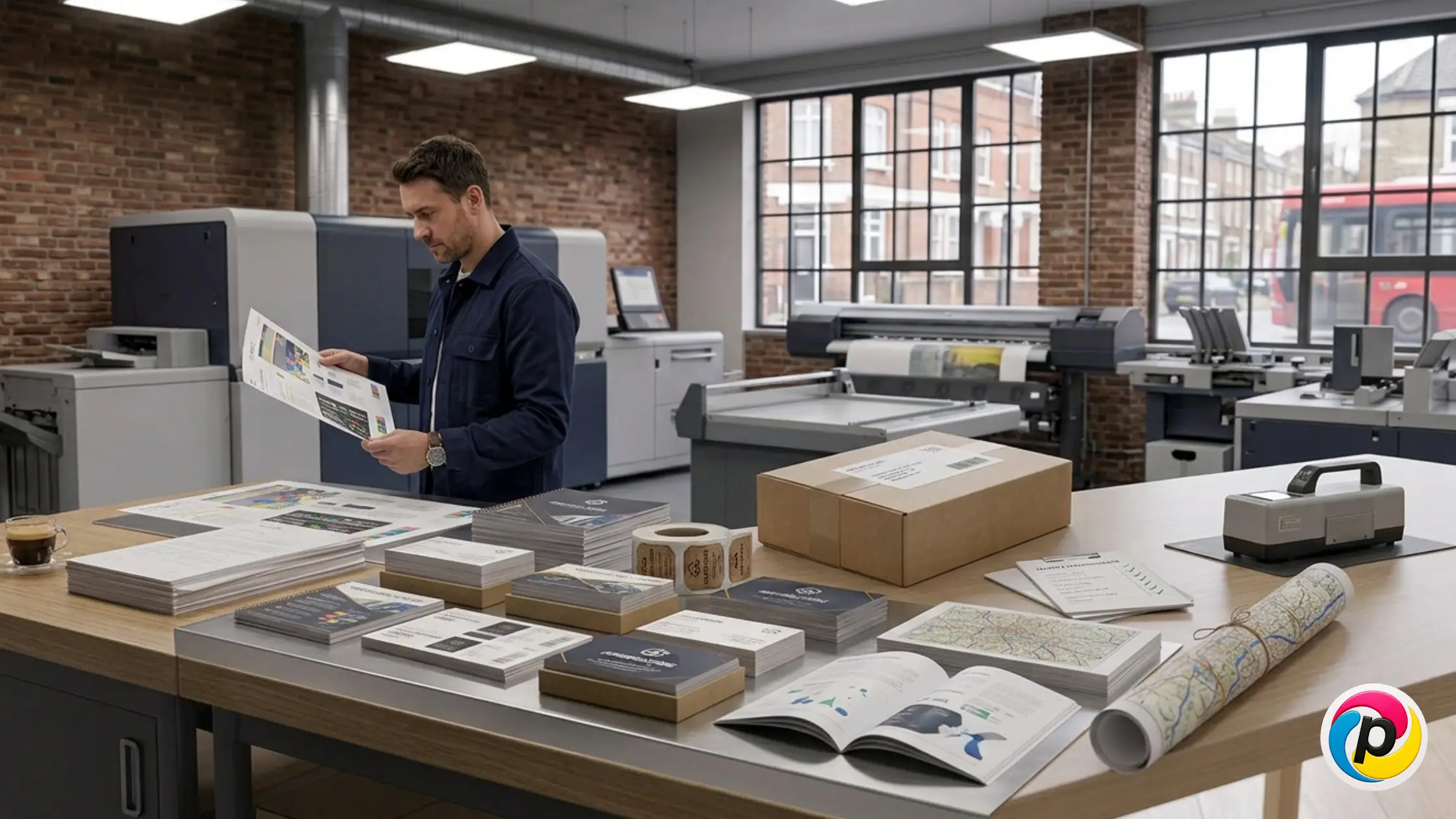
Professional commercial printing company in London

What makes a printing company reliable?

Reliability in printing isn’t simply about producing an attractive finished item. It starts before the job enters production.

A reliable printing company should be able to establish what you’re ordering, identify the important production requirements and give you clear information about what happens next.

Useful signs include:

  • clear information about the printing services offered;
  • realistic production times rather than vague promises;
  • specific artwork requirements;
  • clear pricing based on an agreed specification;
  • straightforward communication;
  • defined collection or delivery arrangements;
  • recent customer reviews relating to similar work.

For an important order, you want to know what you’re buying, when it will be ready and what the printer needs from you to produce it.

Does the printing company produce the type of work you need?

This should be one of the first things you check.

Printing companies can have very different production capabilities. Some focus on everyday document services, while others specialise in commercial print, large-format production, signage, packaging or other areas.

Even two commercial printers may have very different equipment and product ranges.

Rather than asking only “Can you print this?”, provide the basic specification:

  • what the printed item is;
  • finished dimensions;
  • quantity;
  • material, if known;
  • single or double-sided printing;
  • any finishing required;
  • your deadline.

This gives the printer enough information to determine whether the job suits its production setup.

Do you need a printing company or a copy shop?

Before comparing printing companies, make sure you’re looking for the right type of service.

If you simply need to photocopy paperwork, scan something or print a few ordinary documents, a copy shop or library may be the more appropriate option.

If you’re producing professionally printed materials for a business, organisation, event, promotion or other project, a commercial printing company is generally more suitable.

Our guide to print shops vs copy shops explains the distinction in more detail.

How important is location when choosing a printer?

Location can be important, particularly if you want to collect your printing or you’re working to a short deadline.

But it shouldn’t outweigh production capability.

A printing company five minutes away isn’t useful if it doesn’t produce your required format or can’t meet your deadline. Conversely, a printer slightly further away may be a better option if it has the appropriate equipment and offers convenient collection or delivery.

If proximity is particularly important to you, our guide to choosing a print shop near you covers the main things to check when comparing nearby businesses.

Check the turnaround carefully

A reliable printing company should be clear about production times.

Don’t assume that a printer being open means your order can be produced immediately. Printing may involve several production stages, including printing, cutting and finishing.

Turnaround can also depend on:

  • the product;
  • quantity;
  • material availability;
  • finishing;
  • the condition of the supplied artwork;
  • production capacity;
  • collection or delivery requirements.

If you have an event, meeting or other fixed deadline, give the printer the actual date and time you need the completed order rather than simply asking for the fastest option.

What if you need a printing company urgently?

If you need printing today, look specifically for a company offering same-day production.

Then check what “same day” actually means.

There may be an order cut-off, restrictions on certain products or specifications, and requirements for payment and print-ready artwork before production can begin.

Printpal London offers same-day printing in London on many commercial print products, subject to specification and production capacity. Our usual same-day order cut-off is 14:00 Monday to Friday, with payment and print-ready artwork required before the applicable cut-off.

For eligible orders, same-day collection from our North London studio is generally between 17:00 and 18:00, while same-day London courier delivery is generally between 18:00 and 22:00.

Does the printer explain its artwork requirements?

Artwork is an important part of commercial printing, so check what the company expects you to supply.

Requirements vary by product, but these can include the correct finished dimensions, suitable image resolution and bleed where necessary.

PDF is commonly used for professional print artwork because it can preserve dimensions, fonts, graphics and page layout more reliably than many editable document formats.

If you’re unsure whether your file is suitable, ask before placing an urgent order. Discovering a significant artwork problem shortly before a deadline can restrict the available production options.

What should a printer check before production?

The level of artwork checking varies between printing companies.

Some printers use automated preflight systems or production checks to identify certain technical issues before printing. These may detect problems such as incorrect dimensions or other file-related issues, depending on the workflow.

However, a technical artwork check isn’t the same as proofreading.

You should still check the content carefully before submitting the final artwork, particularly:

  • names;
  • telephone numbers;
  • email and website addresses;
  • dates and times;
  • prices;
  • spelling;
  • addresses and venue details.

If you need design or artwork assistance rather than a production check, establish whether that is a separate service.

Should you compare customer reviews?

Yes. Reviews can be particularly useful when you’re choosing a printing company you’ve never used before.

Don’t judge a company purely by its average rating. Read a selection of recent reviews and look for experiences relevant to the type of service you need.

Useful comments might relate to:

  • whether deadlines were handled as expected;
  • communication during the order;
  • how collection or delivery worked;
  • repeat orders;
  • handling of urgent requirements;
  • how the company responded when clarification was needed.

A large number of reviews isn’t by itself proof that a printer is right for your particular job. Use reviews alongside the company’s actual production capabilities and the information it provides about your order.

Should you choose a printer based on price?

Price matters, but make sure you’re comparing the same specification.

One quotation may initially appear cheaper because it uses a different material, quantity, turnaround or delivery method.

When comparing printing quotations, check:

Compare like with like
Finished size
Make sure both quotations are for the same final dimensions.
Quantity
Check that the number of finished copies is identical.
Material
Different papers, cards and other substrates can change the price.
Printing and finishing
Confirm the printed sides and any finishing included in the quotation.
Turnaround
Standard and urgent production may be priced differently.
Collection or delivery
Check whether delivery charges are included or whether you’ll collect the order.

Once the specifications match, the quotations become much more meaningful to compare.

Should you ask for samples?

Samples can sometimes be useful when choosing a material or finishing option, particularly for larger or repeat orders.

However, don’t assume every printer provides physical samples for every product or material. Sample availability varies between printing companies and production methods.

For a straightforward or urgent job, there may also be insufficient time to arrange samples before production.

If seeing a particular material before ordering is essential, ask the printer what options are available before committing to the job.

Can a reliable printer guarantee exact colours?

You should be cautious of treating screen colours as an exact representation of printed colour.

Computer and phone screens produce colour using light, while printing uses physical inks or toners on a material. The printing process and substrate can influence the finished appearance.

For this reason, an RGB colour displayed on your monitor shouldn’t be assumed to reproduce exactly when printed.

If colour is particularly important to a project, discuss the requirements with the printer before production rather than relying solely on how the artwork appears on screen.

Is communication important when choosing a printing company?

For anything beyond a completely standard order, yes.

Clear communication is especially valuable when:

  • the deadline is fixed;
  • the specification is unusual;
  • you’re uncertain about the appropriate material;
  • several printed items are required for the same project;
  • the artwork needs clarification;
  • delivery or collection timing is important.

You don’t necessarily need a lengthy consultation. Often, a concise exchange confirming the specification and deadline is enough.

The important thing is that both you and the printer understand what has been ordered before production begins.

Is it better to use a local or online printing company?

Neither option is automatically more reliable.

An online printer can be a very practical choice for standard specifications with flexible deadlines. A local printer can be particularly useful where collection, urgent production or direct discussion of the specification matters.

We’ve compared these options separately in our guide to choosing a local printer vs online printer.

How can you test a new printing company?

If you’re considering a printer for ongoing business work, starting with a straightforward order can be useful.

This allows you to experience the ordering process, communication, production turnaround and collection or delivery before relying on the supplier for a particularly complicated or time-sensitive project.

For repeat printing, keep a record of the previous specification and order details. This makes it easier to explain exactly what you need when reordering.

Choosing a printing company in London

London has a large number of printing companies, ranging from document and copy shops to specialist and commercial printers.

If you’re looking for professional commercial printing, check whether the company produces the type of work you need, whether its turnaround fits your deadline and whether collection or delivery arrangements are practical for your location.

Printpal London is a commercial printer based in Finchley, North London. We produce professional printed materials for businesses, organisations, events and individuals, with standard and same-day production options depending on the specification.

We’re primarily a commercial printing company rather than a traditional walk-in copy shop. We don’t offer photocopying, scanning or self-service printing.

Customers generally send their requirements and artwork electronically before production. Completed orders can then be collected from our Finchley studio or delivered.

Frequently asked questions

How do I find a reliable printing company near me?

Look for local printing companies that actually produce the type of work you need, then compare their turnaround, artwork requirements, communication, collection or delivery arrangements and recent customer reviews. Don’t choose solely according to distance.

How do I know if a printing company is legitimate?

Check that the business provides clear contact information, explains its services and ordering process and has a consistent online presence. Recent independent customer reviews can provide additional context when you’re using a company for the first time.

What information should I give a printing company?

As a starting point, provide the product or intended use, finished size, quantity, material if known, printed sides, finishing requirements, artwork and deadline. This allows the printer to assess the job properly.

Should I choose the printing company with the most reviews?

Not necessarily. Reviews are useful, but they should be considered alongside production capability and whether the company is suitable for your particular job. Read recent reviews rather than relying only on the overall number.

Can a local printing company produce something the same day?

Some can. Same-day availability depends on the product, specification, quantity, artwork and production capacity. Check the company’s order cut-off and requirements before placing an urgent order.

Should I use the same printing company for every job?

Not necessarily. Different printers have different equipment and specialisms. A company that is ideal for one type of printing may not be the best option for another. For repeat jobs, however, using a printer that already understands the previous specification can be convenient.

So, how should you choose a printing company near you?

Start with capability, then consider reliability, turnaround, communication, location and price.

A good choice is a printing company that can clearly confirm what it will produce, what it needs from you, when the order will be ready and how you’ll receive it.

For basic photocopying or everyday document printing, a copy shop or library may still be the better option. For professional business, marketing, event and display materials, look for a commercial printer equipped for the specification you actually need.